
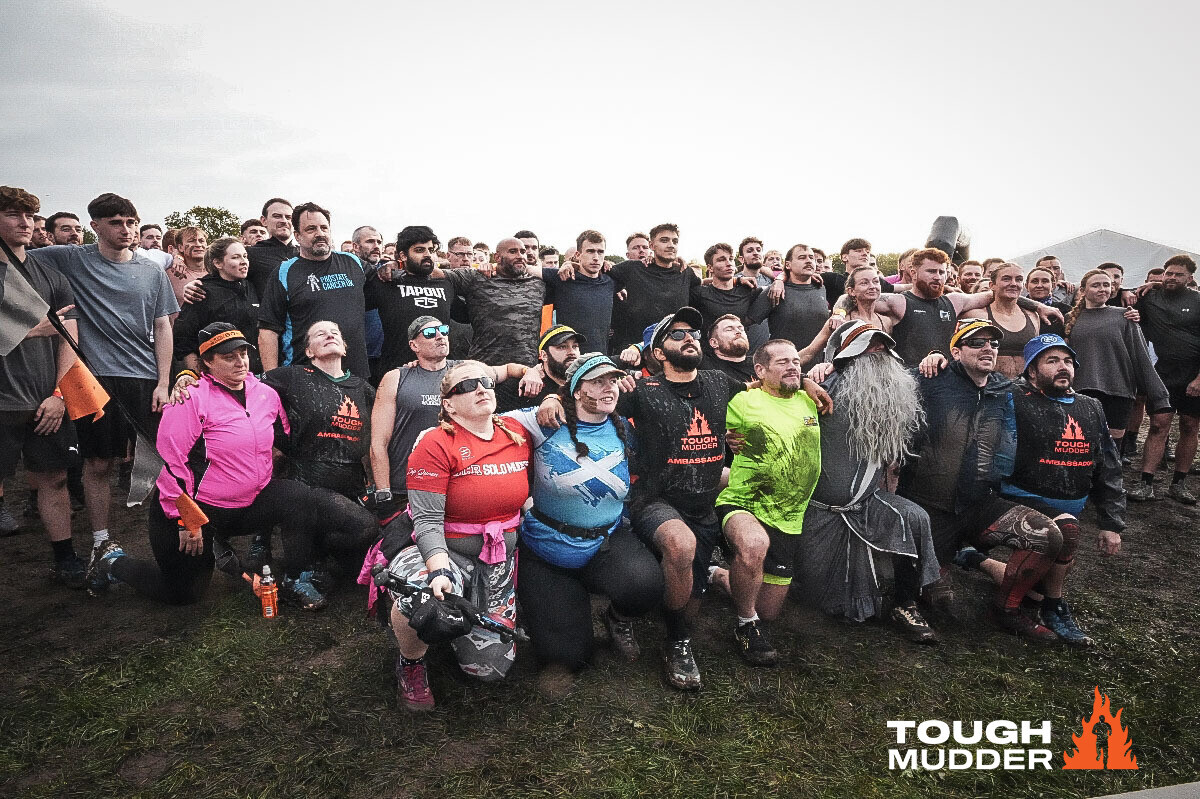
10–11 October 2026 | Cheshire Showground
Six runs. Two days. A nominal 60 kilometres. Fourteen Tough Mudder finishes in my first season.
And somewhere along the way, a hedgehog got lost looking for somewhere warm to hibernate.
Welcome to Tough Mudder Manchester 2026.
This was, by far, my most ambitious Tough Mudder weekend to date. It was also one of the coldest, wettest and muddiest experiences I’ve had since starting this rather ridiculous journey.
There were moments of genuine satisfaction, moments when I questioned my life choices, and more than a few moments when I wondered whether collecting another shiny piece of metal was really worth it.
Of course it was.
Probably.
Maybe.
Let’s start at the beginning.
How Five Runs Became Six
Manchester wasn’t simply about finishing another Tough Mudder weekend.
I’m increasingly conscious of what I want to achieve in 2027, particularly my first Tough Mudder Infinity at London West, where I have set myself the ambitious target of exceeding 50 kilometres, and ultimately World’s Toughest Mudder in June.
I’ve already proved I can complete multiple runs in a day. At London South, I managed 25 kilometres, and came away feeling that there was more in the tank.
The question was how much more?
- Could I complete three 15k runs in one day?
- Could I maintain enough pace to make the next starting wave?
- Could I keep going after 30 kilometres?
- And what would happen when fatigue really started to kick in?
Unfortunately, the Manchester wave times didn’t make three 15k runs particularly practical. I might have managed it, but with no certainty about how long the second lap would take, I wasn’t confident I’d get back to the starting pen in time.
So I settled on two 15ks and a 5k on Saturday.
Thirty-five kilometres.
A new personal daily distance target.
Then Sunday.
Another 15k and a 5k.
Fifty-five kilometres booked across five runs. Perfectly sensible, by my increasingly questionable standards.
There was, however, a problem.
Completing those five runs would leave me finishing 2026 with thirteen Tough Mudder finishes.
Thirteen.
That didn’t feel right.
I spent several days looking at Sunday’s wave times, calculating the possibilities and wondering whether I could squeeze in another 5k.
Then, around Amazon Prime Day, Tough Mudder ran a 25% discount promotion.
Well, it would have been rude not to.
Six runs booked. Sixty kilometres advertised. Fourteen Tough Mudder finishes for the year.
What had I done?
Enter the Digital Pit Crew
One thing that has become increasingly apparent during my Tough Mudder journey is that enthusiasm and determination will only get me so far.
If I’m serious about World’s Toughest Mudder, I need to approach these events with a little more science.
Fortunately, I have the Tough Smudge Digital Pit Crew.
An increasingly important part of the team, particularly when spreadsheets, statistics and unnecessarily detailed analysis are involved.
For Manchester, I wanted to take my preparation a little further.
The plan was to examine the published course map, compare it against topographical mapping, estimate changes in elevation and work out where I would need to maintain my pace to complete each run in time for the next starting wave.
I was also experimenting with energy gels and electrolyte drinks, so we looked at nutrition and hydration strategies.
None of this was about winning races.
It was about learning how to keep moving, how to recover between laps and how to make sensible decisions during longer endurance events.
I had also invested in a new Garmin Enduro 3.
After several frustrating experiences with previous watches failing to record activities correctly, I wanted something capable of tracking the longer challenges I have planned, including a full World’s Toughest Mudder.
The Enduro 3 has extraordinary battery life, and its Obstacle Course Racing activity has a particularly interesting feature.
You can mark obstacles as you encounter them, and on subsequent laps the watch can recognise previously recorded obstacle locations.
Perfect for someone who likes statistics.
Which, as we have established, might be me.
There was just one slight problem.
I would need to be able to use my fingers.
More on that shortly.
The Spaghetti Incident
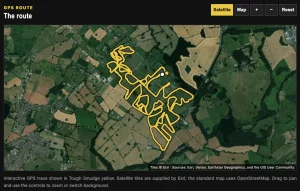
The first frustration was that the official Manchester course map wasn’t released until Friday.
Not ideal when your Digital Pit Crew is trying to analyse the course in advance.
Nevertheless, we got to work.
The Cheshire Showground is relatively flat compared with the other Tough Mudder venues I’ve experienced this year.
But the route itself?
Imagine throwing a plate of spaghetti onto a map, then deciding every strand represents a running route.
It twisted and turned through almost every available corner of the showground.
The locations of some obstacles were fairly predictable. Mud Mile and Sewer Rat, for example, were always likely to be towards the edges of the grounds.
You wouldn’t dig Mud Mile in the middle of the main showground.
Well, probably not.
The analysis gave me an idea of the pacing required.
Now all I had to do was run it.
Six times.
Saturday: The Weather Had Other Ideas
Saturday arrived considerably faster than I would have liked.
I hadn’t slept particularly well during the preceding week. I’d been winding down my daily Peloton sessions, but didn’t feel I’d done enough stretching or preparation.
Despite all the planning, I wasn’t feeling especially ready.
And there was one thing I had spectacularly underestimated.
The weather.
I arrived at Cheshire Showground while it was still dark.
The ground was already boggy. It was raining, windy and thoroughly miserable.
As I got out of the car, I began wondering whether I’d brought enough cold-weather running kit.
Not that anything was going to stay dry for particularly long once I’d tackled Mud Mile, Sewer Rat, Cage Crawl and the other water obstacles.
While waiting for the gates to open, I played a ridiculous game with my poncho.
Rain starts. Poncho on.
Rain stops. Poncho off.
Rain starts again.
Poncho back on.
I think the weather was doing it deliberately.
More concerning was the temperature.
I was cold before I’d even started running, and my fingers were already beginning to suffer from Raynaud’s.
Not a good sign.
I normally enjoy waiting for the first wave. It’s an opportunity to chat with other Legionnaires, swap experiences and pick up a few tips.
There wasn’t quite as much conversation this morning.
Everyone seemed far too cold.
Manchester also felt noticeably quieter than the other Tough Mudders I’d attended this year. Whether that was partly because the event was taking place in October, I don’t know, but it certainly felt late in the season.
You can imagine my delight when I later discovered Manchester 2027 had moved to early September!
Three Wristbands and One Last Patch of Grass
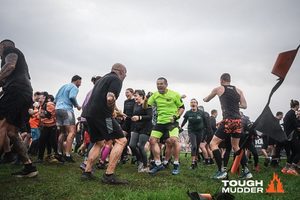
Once the gates opened, the familiar routine began.
Three run wristbands collected, facial recognition band sorted, and then off to bag drop.
I’ve developed a useful habit when completing multiple runs.
I explain to the bag-drop team that I’ll be returning throughout the day to deposit medals, headbands, T-shirts and other goodies before heading back onto the course.
It’s a small thing, but it makes life considerably easier.
With everything organised, I wandered around the event village, greeting a few familiar faces among the ambassadors and regular runners.
One of the things I increasingly enjoy about Tough Mudder is recognising people from previous events.
It’s beginning to feel like a community I’m becoming part of, rather than simply an event I attend.
Meanwhile, the mission to stay warm was failing.
I’d brought new gloves to try.
Fingerless gloves.
Yes.
Fingerless.
In October.
In the rain.
I would later conclude this had been a rather significant tactical error.
Eventually it was time for the first wave.
Our starting pen host was Bobbie, The Tough MC. I’m gradually getting to recognise the different hosts, having seen Dave Payne at London South.
Bobbie brought the usual start-line energy, despite the weather doing its best to dampen everyone’s enthusiasm.
The safety briefing, the warm-up, the bouncing around and the countdown.
And smoke grenades.
Lots of orange smoke.
There was still grass in the starting pen.
I mention this because it was the last time I would see grass there all weekend.
Ten, nine, eight…
And we were off.
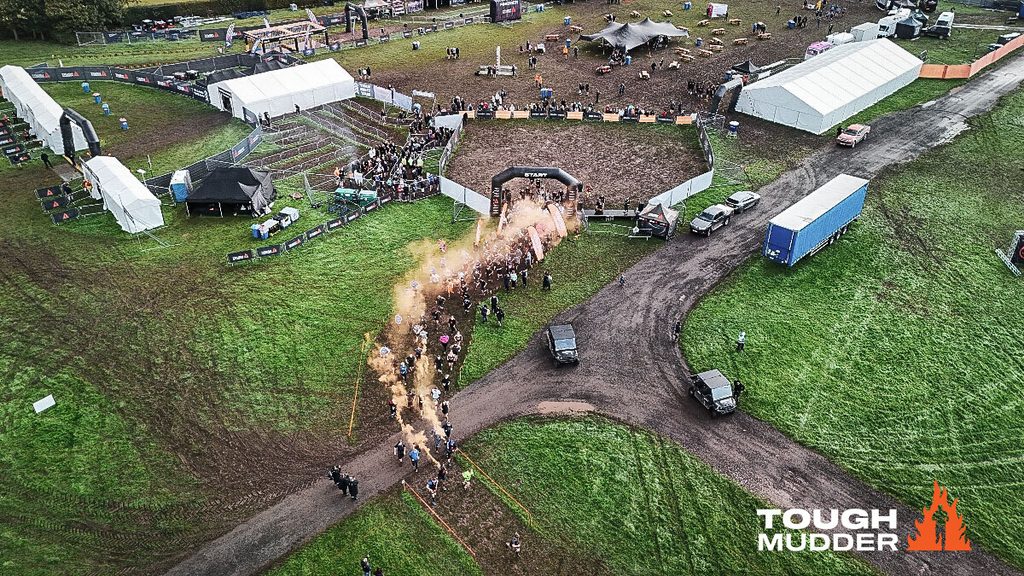
Photo:sportograf.com
Thirty Kilometres and the Disappearing Fingers
One of the aims of Manchester was to test the Garmin’s obstacle recording.
I completed the first obstacle.
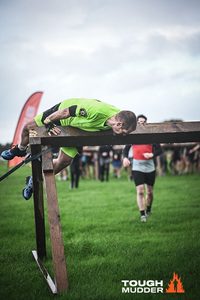
Then remembered I was supposed to mark it on the watch.
Whoops.
Never mind. I’d remember the next one.
Except I didn’t always.
And as the morning progressed, using the buttons became increasingly difficult.
The cold was having a serious effect on my hands.
Raynaud’s is something I’ve experienced before, but Saturday was particularly bad.
At Hangin’ Tough, I managed to grab the rings but slipped off in the wet conditions.
At Ape Sh*t, I simply couldn’t maintain a grip on the soaking metal wheels.
And then came Dong Dangler.
I remember looking at my hands on the rope.
I thought I had a proper grip.
But when I actually looked, my fingers weren’t behaving as I expected. They were curling around the rope rather than gripping it properly.
I could barely feel what I was doing.
It was a strange and rather unsettling moment.
The colour of my fingers wasn’t especially reassuring either.
At that point, the problem wasn’t simply insufficient grip strength.
I couldn’t properly feel or control my hands.
For the rest of Saturday, obstacles requiring a secure grip became extraordinarily difficult.
It was frustrating.
I’ve been working on my strength, and I know there are obstacles I should be capable of completing with the right technique.
But strength doesn’t help much when your fingers refuse to cooperate.
It’s one of the biggest lessons I’m taking away from Manchester.
Cold-weather preparation isn’t merely about comfort.
For me, it can determine whether I can safely tackle an obstacle at all.
And the fact that my fingers were still tender when I came to write this has made me realise that I need to take these episodes more seriously.
Sometimes Walking Is the Sensible Option
Away from the obstacles, I was pleased with how well I continued to move.
My pace gradually reduced as the day progressed, but that was hardly surprising.
My legs were getting tired.
The conditions were getting muddier.
And I was accumulating kilometres.
There were occasions when I walked because I was chatting to other Mudders. One of the best things about these events is the conversations you have along the way.
But there was also one particular section after Sewer Rat where I made a conscious decision to walk.
The route crossed an old 4×4 course.
Imagine Mud Mile, only longer, twisting and turning through deeply rutted mud, with rocks hiding under the surface.
It was tremendous fun.
But I didn’t consider it safe to run.
And I made what I believe was the correct decision.
I wasn’t there to achieve the fastest possible time.
I was there to complete six runs.
There was absolutely no point risking an injury on Saturday morning that could end the whole weekend.
Sometimes endurance is about knowing when not to run.
That’s something I want to remember for World’s Toughest Mudder.
The Course Begins to Change
As Saturday progressed, so did the condition of the course.
The starting pen became a muddy mess, the ground deteriorated, and sections of the route began to change.
By my second 15k, part of the course before Sewer Rat had been closed.
A further section north of Sewer Rat would be closed on Sunday.
These weren’t insignificant changes, although at the time my main concern was simply getting around and being ready for the next run.
The Garmin recorded approximately 31.8 kilometres across Saturday’s two 15ks, including the movement between them.
Both runs completed.
Thirty kilometres advertised, and still one more run to go.
Time for another shiny.
Saturday’s 5k: The Great Manchester Hibernation Expedition
By the time I’d completed two 15ks, I was cold, tired and rather muddy.
I had another 5k to complete.
Fortunately, hedgehogs are resourceful creatures.
Unfortunately, this particular hedgehog was apparently searching for somewhere warm to hibernate.
I set off on the 5k course.
Completed the first obstacle.
And then, instead of following the 5k route, I followed the spectator route.
Yes.
The spectator route.
I’m still convinced there were other runners going in the same direction, but somewhere along the way I had taken a wrong turn.
I continued, blissfully unaware of my navigational achievement.
It wasn’t until I reached the junction near Sewer Rat that I realised something wasn’t right.
A little backtracking followed, before I eventually rejoined the proper route.
Unfortunately, this meant I’d bypassed Twinkle Toes, Ape Sh*t and Kiss of Mud.
Oh, what a shame about Twinkle Toes.
Terribly disappointing.
I was devastated.
Obviously.
The Garmin later confirmed that I’d covered around 4.2 kilometres, considerably less than the intended 5k route.
But here’s the interesting thing.
My two 15ks had already added up to more than their advertised distance, and despite my accidental shortcut, I’d covered roughly 36 kilometres across the three activities, including the between-run movement.
More importantly, I’d completed all three booked runs and was still in one piece.
Was I disappointed about going wrong?
A little.
But I wasn’t going to let it spoil the day.
Three runs completed. Three more to go.
And somewhere in Cheshire, a spectator was probably wondering why a muddy hedgehog had appeared on their walking route.
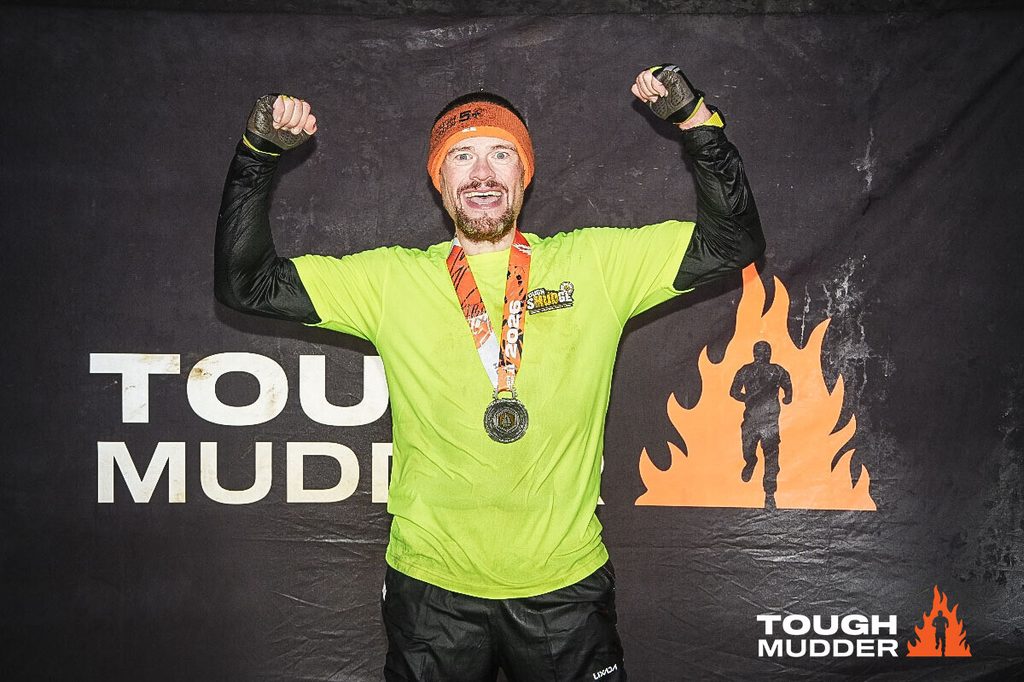
Photo: sportograf.com
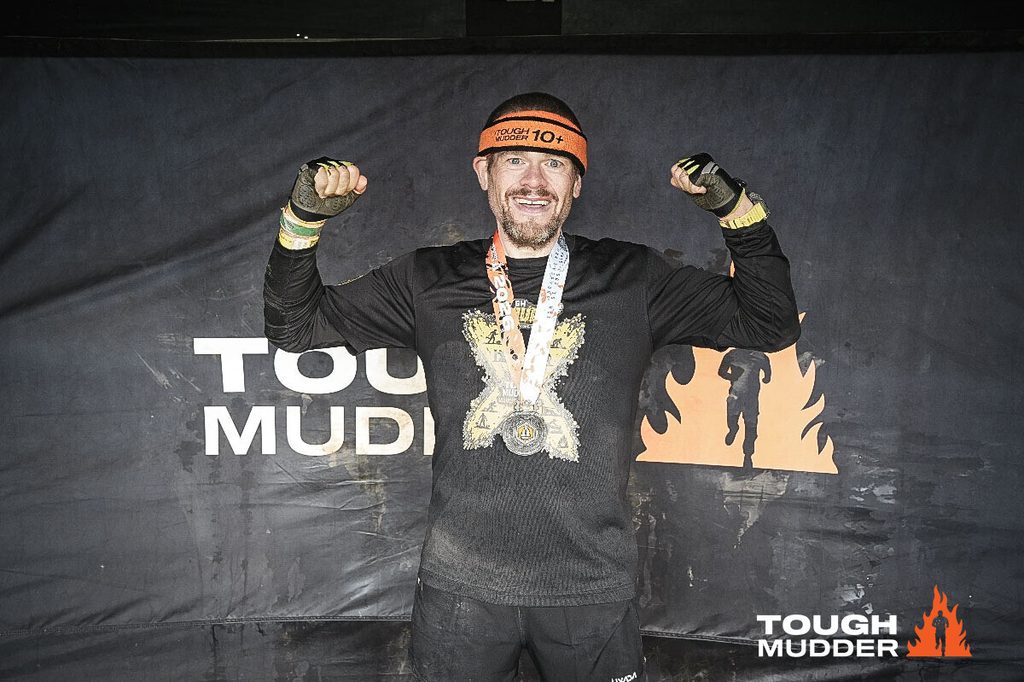
Photo: sportograf.com
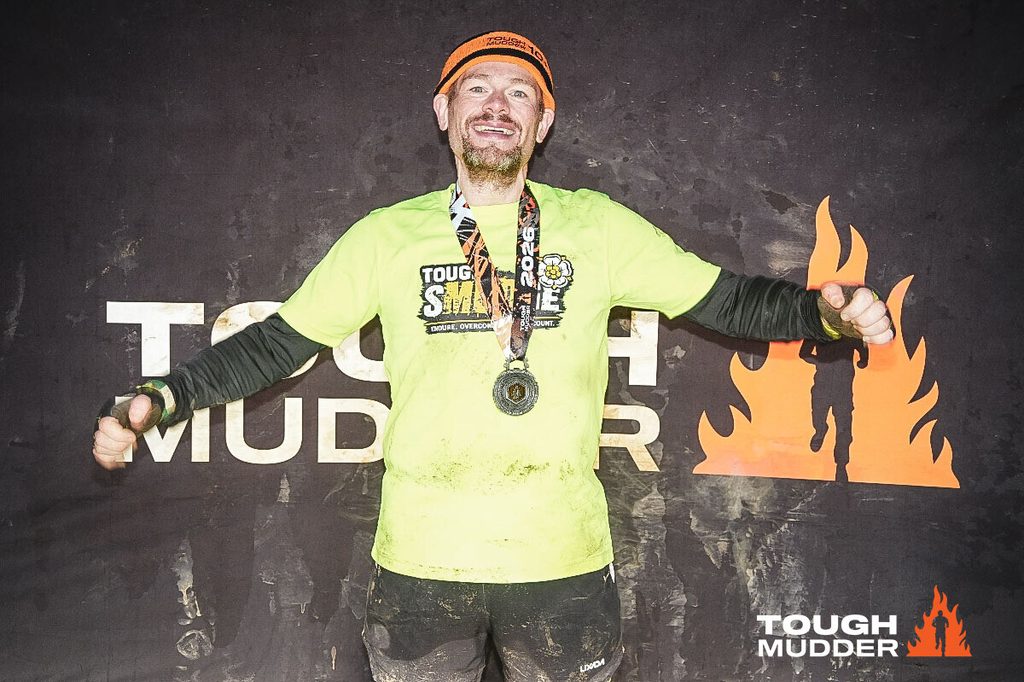
Photo: sportograf.com
Sunday: Surely I Wasn’t Doing This Again?
Sunday morning.
I woke up.
Everything hurt.
Well, not quite everything, but my legs were incredibly stiff, I was tired, and the prospect of returning to Cheshire Showground for another three Tough Mudders wasn’t filling me with excitement.
Not even a little bit.
Saturday had been cold, wet, muddy and exhausting.
The course had deteriorated throughout the day. Sections were being closed, vehicles had already been getting stuck in the car park, and I was beginning to wonder what state everything would be in after another night of rain.
Would the course even be safe to run?
I’d already made the decision at Born Survivor that attempting a second 12k lap in those conditions would have been too dangerous. I didn’t want to find myself in a similar situation here.
And then there were my legs.
Were they genuinely up to another 25 kilometres?
To make matters worse, I’d had a rather unsettled stomach on Saturday night.
Not exactly ideal preparation for an obstacle course.
The thought of getting halfway around the course and discovering that I needed to use one of the portaloos was almost too terrible to contemplate.
There are some things worse than death.
A Tough Mudder portaloo after hundreds of muddy runners have been using it might just be one of them.
🤮
- Had I bitten off more than I could chew?
- Did I really need to do this all again?
- I could simply stay in bed.
- I’d already completed three runs and covered more than 35 kilometres on Saturday.
Surely that was enough?
But the answer, of course, was no.
I wasn’t aware of any running injury. I was stiff, tired and uncomfortable, but that wasn’t the same as being injured.
And I had made a commitment to myself.
Endure. Overcome. Make It Count.
These were going to be my final three Tough Mudders of 2026.
I wanted to finish what I’d started.
And, perhaps more importantly…
I NEEDED ANOTHER THREE SHINY MEDALS!
There. I’ve said it.
Kit on. Bag packed.
Off we go.
Even the Motorways Wanted Me to Go Home
Apparently, the universe wasn’t entirely convinced by my decision.
The M62 was closed.
Google Maps kept telling me that the road ahead was closed, immediately followed by the reassuring announcement that I was still on the fastest route.
Helpful.
Very helpful.
It felt as though everything was trying to persuade me to turn around and go home.
But I persevered.
Eventually, I reached Cheshire Showground.
The parking attendants were offering some particularly useful advice.
“Stay on the green bits as much as possible, and don’t stop on the brown.”
Excellent advice.
Not something you normally expect to hear when arriving at a sporting event, but after seeing vehicles getting stuck on Saturday, I considered it extremely sensible.
I found somewhere to park.
And this time, I wasn’t going to make the same mistake as Saturday morning.
I was going to stay warm.
So I sat in the car.
And waited.
And waited.
And waited some more.
All right, it was probably only about thirty minutes.
But I wanted to get going.
Eventually, I decided I’d had enough waiting and toddled off towards the check-in tents.
Which were still closed.
Brilliant.
I’d managed to be first in the queue again.
And cold.
Again.
Some lessons take longer to learn than others.
A Familiar Face in the Starting Pen
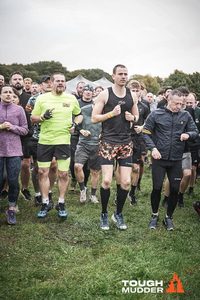
The event village was an absolute quagmire.
There was mud everywhere.
Saturday’s pristine patches of grass were now distant memories.
After checking in, I headed to bag drop, where one of the security staff asked me to move my bag into a separate, taped-off area.
Apparently, this was where the ambassadors and Legionnaires doing multiple laps could leave their belongings, making it easier for security to recognise the people repeatedly returning to their bags.
Another little piece of Tough Mudder knowledge acquired.
And another example of how much I’m learning simply by attending these events.
Eventually, it was time for First Mud.
The starting pen opened.
And there was Bobbie on the microphone again.
By this point, I’d apparently become something of a regular.
He recognised me and asked how many runs I was doing today.
Three, obviously.
Because doing another three after yesterday’s efforts was a perfectly sensible thing to do.
As I stood listening to the briefing, my teeth were chattering.
I was shivering.
My legs were stiff.
I was still cold.
And I was fairly certain this wasn’t going to be much fun.
On Saturday, during my final run, I’d been given one of the smoke grenades to carry at the start.
That had been quite an experience, and I’d stayed towards the front of the group.
Not today.
Today, I wasn’t particularly interested in being at the front.
In fact, I wasn’t particularly interested in being there at all.
But before I knew it, the countdown had finished.
And we were off.
Something Strange Happened
I started running.
And…
It didn’t hurt.
Well, not in the way I’d been expecting.
Yes, my legs were tired.
Yes, I could feel Saturday’s efforts.
But I could run.
I wasn’t struggling to move, and once I’d settled into a rhythm, things felt considerably better than they had while standing shivering in the starting pen.
What a relief.
There was another difference today.
I wasn’t chasing an 11 o’clock starting wave.
My first 5k wasn’t booked until midday, so I had a leisurely three hours to complete the 15k.
Three hours!
Practically a holiday.
For once, there was no pressure to keep looking at my watch and calculate whether I was going to make the next wave.
I could simply run at a sensible pace.
And that felt rather nice.
I still finished comfortably inside the three-hour window.
But the lack of urgency gave me something useful to think about.
Perhaps there’s something to be said for starting a little more slowly.
Not pushing quite so hard.
Conserving energy for what comes next.
It’s particularly relevant when I think about Infinity and World’s Toughest Mudder.
Because those aren’t about how quickly I can complete the first lap.
They’re about how many laps I can keep completing.
A Quieter Course, But Still Plenty of Mud
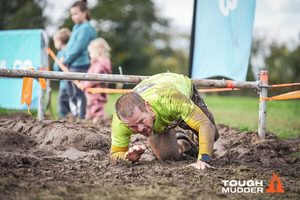
Sunday was noticeably quieter.
I’d experienced something similar at London South, where the atmosphere on Sunday felt very different from Saturday.
There were fewer people, fewer conversations and generally less activity around the course.
It’s something I need to bear in mind when planning future weekends, particularly when booking multiple Sunday runs.
As the day progresses, parts of the event start winding down while people are still out on the course.
There were also some changes to the Manchester route.
A few sections had been removed, including an area north of Sewer Rat, and some obstacles were operating with reduced capacity.
But overall, the run went reasonably well.
I also made a conscious effort to stick to my nutrition and hydration plan.
At the first water station, I had a cup of Tough Mudder’s Emerge drink and some water.
At the next, an energy gel and more water.
At the third, another gel, more water and some of the strawberry Emerge drink.
It wasn’t a perfect fuelling strategy, and looking back over the whole weekend I still don’t think I ate or drank enough.
But at least I was making a more deliberate effort to fuel the activity rather than simply hoping for the best.
The kilometres ticked by.
The obstacles came and went.
And eventually, I crossed the finish line.
Four down. Two to go.
The Fastest Pit Stop in Cheshire
As I crossed the finish line, I heard Bobbie on the microphone announcing that the whole course was now open and anyone waiting to run could make their way into the starting pen.
It really was quiet!
My next run wasn’t due to start for another half an hour or so.
But if the course was open…
Well, why wait?
What followed was possibly the fastest medal, T-shirt, headband and free-drink collection and bag-drop operation in Tough Smudge history.
Shiny collected.
Goodies deposited.
Straight back into the starting pen.
I was about thirty minutes ahead of my booked starting time.
At this rate, I could be home and sitting in a lovely hot bath by three o’clock.
That sounded absolutely wonderful.
The M60 and M62 motorway closures would later have other ideas, but I did eventually make it home by four.
Not bad.
This Time, No Spectator Route!
After Saturday’s rather embarrassing navigational expedition, I had one very clear objective for Sunday’s first 5k.
Don’t get lost.
I know.
Ambitious.
But I was determined to follow the actual course this time.
And I did!
Twinkle Toes.
Ape Sh*t.
Kiss of Mud.
All present and correct.
Then onwards towards Sewer Rat and the remaining obstacles.
I also decided to have another go at the Garmin’s obstacle tracking.
Since I was completing two 5ks, this was an ideal opportunity to see whether the watch could recognise the obstacles on the second lap.
Unfortunately, the experiment was only partially successful.
My fingers were still giving me problems, and operating the buttons reliably remained difficult.
But fortunately, the Digital Pit Crew has subsequently been investigating the GPS data and working out where everything was.
In fact, comparing all six Manchester runs has proved rather fascinating.
We’ve been able to identify the course changes, examine the missing sections and even reconstruct my Saturday spectator-route adventure.
This is going to be particularly useful for future events.
Perhaps I can just concentrate on running, while the Digital Pit Crew sorts out the statistics afterwards.
Although I suspect Smudge will still want to press buttons.
He does like his numbers.
Becoming a Familiar Face
One of my favourite parts of the weekend had nothing to do with running.
It was the people.
On Saturday, I’d been chatting with Steve, an extremely experienced obstacle course runner who told me he’d completed around 85 miles at World’s Toughest Mudder last year.
I’d recognised him from London South.
Well, recognised the back of him, mostly!
I’d seen him disappear into the distance at the start and the before had shouted to him from the top of Mudderhorn as he walked away having completed his run.
His experience is extraordinary.
He told me that his longest pit stop during World’s Toughest Mudder was just seven minutes.
Seven minutes!
There I was thinking about how to organise my pit for next year, and here’s someone who has managed to keep his stops incredibly efficient over an 85-mile endurance event.
Conversations like that are invaluable.
On Sunday, he was back again, running with his father and, I think, his brother.
And there was a rather lovely moment when I was standing in the queue for the starting pen.
I suddenly felt someone rubbing my head.
It was Steve!
I hadn’t even realised he was there.
That sort of friendly recognition is something I’m really beginning to enjoy about Tough Mudder.
I’m starting to know people.
And, perhaps more surprisingly, people are starting to know me.
Apparently, I’m Slightly Tapped
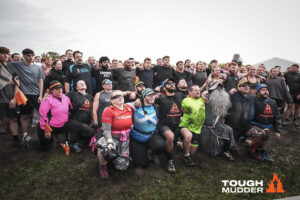
At one of Sunday’s starts, there was a charity fundraising group in the pen.
They asked me to take a photograph.
Simple enough.
Except somehow, the photograph grew into practically the entire starting group gathering together.
I believe the group were from a local community organisation raising money for a mosque and work supporting young people following a loss within their community.
I wish I could remember their name.
Hopefully I’ll be able to find the photograph.
Anyway, Bobbie noticed what was happening and decided to get involved.
He started telling the group that the guy taking the photo was a ridiculous chap who had completed 35 kilometres the previous day and was back for another 25 kilometres on Sunday.
I can’t remember his exact words, but I distinctly remember the suggestion that I was slightly tapped.
Fair enough.
I wasn’t going to argue.
He encouraged everyone to give me a shout-out, then made sure I joined the others for the photograph.
It was a genuinely lovely moment.
For a few seconds, all those kilometres, the cold, the mud and the tiredness were being recognised by a group of people who had probably never met me before.
It wasn’t something I’d expected.
And it meant a lot.
One Last Lap
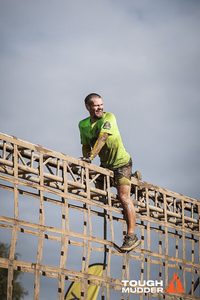
Eventually, it was time for the final 5k.
The sixth run of the weekend.
The fourteenth Tough Mudder of my first season.
I was nearly there.
Bobbie gave me another special shout-out, this time to what must have been one of the smallest starting groups I’d ever seen.
There weren’t many of us left!
I set off, knowing this was the final time I’d have to tackle the course.
Of course, the Garmin decided to make things a little more complicated.
I’d been recording the event village as an extended obstacle, effectively treating it as a pit stop between laps.
Unfortunately, I had some difficulty ending that section, and shortly after starting I found myself stopped, attempting to sort out the watch.
By the time I got moving again, I was in last place.
Wonderful.
Still, I soon picked up the pace.
And by the time I reached the obstacles, I was catching people who were completing earlier 5ks and even some of the remaining 15k runners.
The course was familiar now.
Almost every turn.
Every muddy stretch.
Every obstacle.
I’d been around it enough times over the weekend.
And I knew that each kilometre was taking me closer to the final finish line.
There were moments when I questioned my life choices.
Again.
But I kept moving.
And eventually, there it was.
Electroshock Therapy.
The final obstacle.
I’d made it.
SIX OUT OF SIX!
By the time I reached Electroshock Therapy, I was done.
Not aware of any serious running injury.
Just thoroughly tired.
My legs were stiff, my hands had taken a battering, and I’d spent a substantial part of the weekend wondering why I’d thought this was such a good idea.
But I’d completed it.
Six runs. Two days. Sixty kilometres of advertised Tough Mudder events.
All finished.
Fourteen Tough Mudder completions in my first season.
I couldn’t quite believe it.
As I went to have my final photograph taken, I shouted something about having completed 60 kilometres in one weekend.
A small group of people waiting for their own photographs actually applauded.
Only a little round of applause.
But it was lovely.
I hope some of the volunteers and event staff will remember the slightly crazy short bloke in the bright yellow shirt who seemed to spend the entire weekend coming back for more.
The one who kept appearing in the starting pen.
The one Bobbie kept mentioning.
The one who was still smiling, albeit moving rather stiffly, as he made his final visit through the merchandise area of 2026.
And, of course, the one who collected six more shiny medals.
Six starts. Six finishes.
I’d done it.
And as I headed back to the car, tired, muddy and looking forward to an extremely long hot bath, I felt something rather wonderful.
Satisfaction.
Not just because I’d completed the distance.
But because I’d woken up that morning full of doubts, seriously questioned whether I could do another three runs, and then gone out and completed them.
That is probably the biggest lesson Sunday gave me.
You don’t always wake up feeling ready.
You don’t always feel enthusiastic.
Sometimes the challenge begins long before you reach the starting line.
But having assessed how I felt and decided I could safely continue, I got on with it.
I endured.
I overcame.
And I made those final three Tough Mudders of the year count.
Although, in fairness, the promise of another three shiny medals probably helped.
Quite a lot.
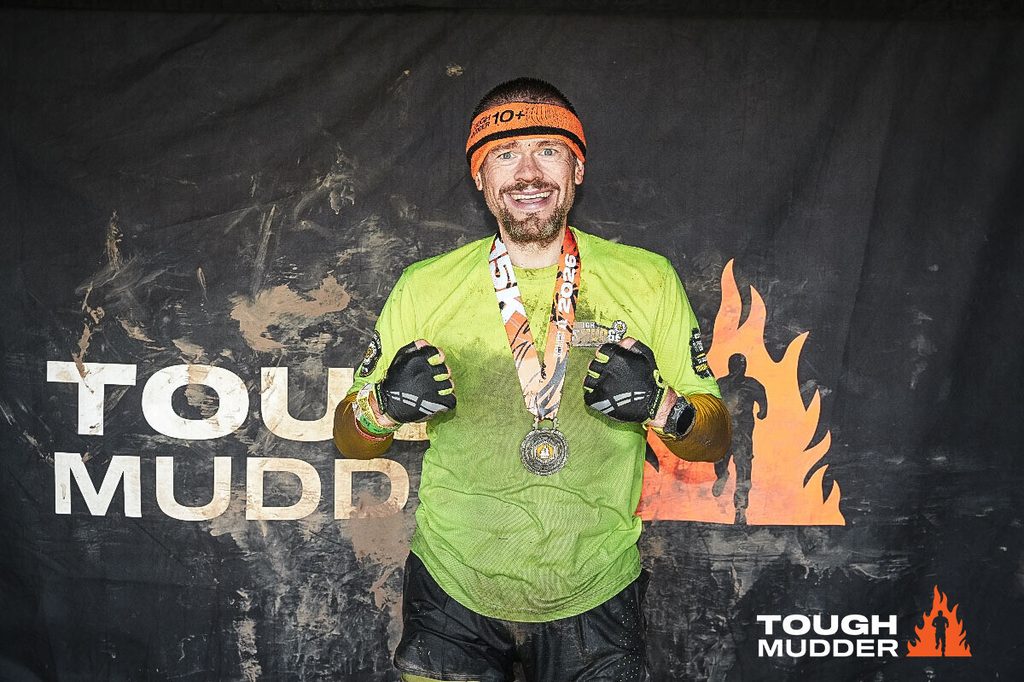
Photo: sportograf.com
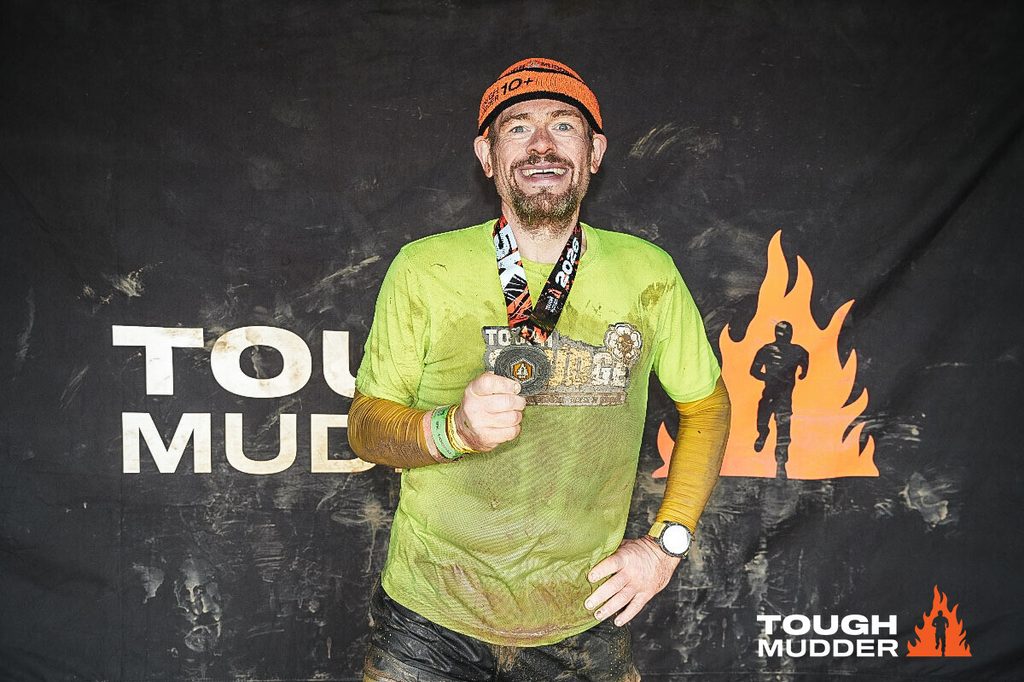
Photo: sportograf.com
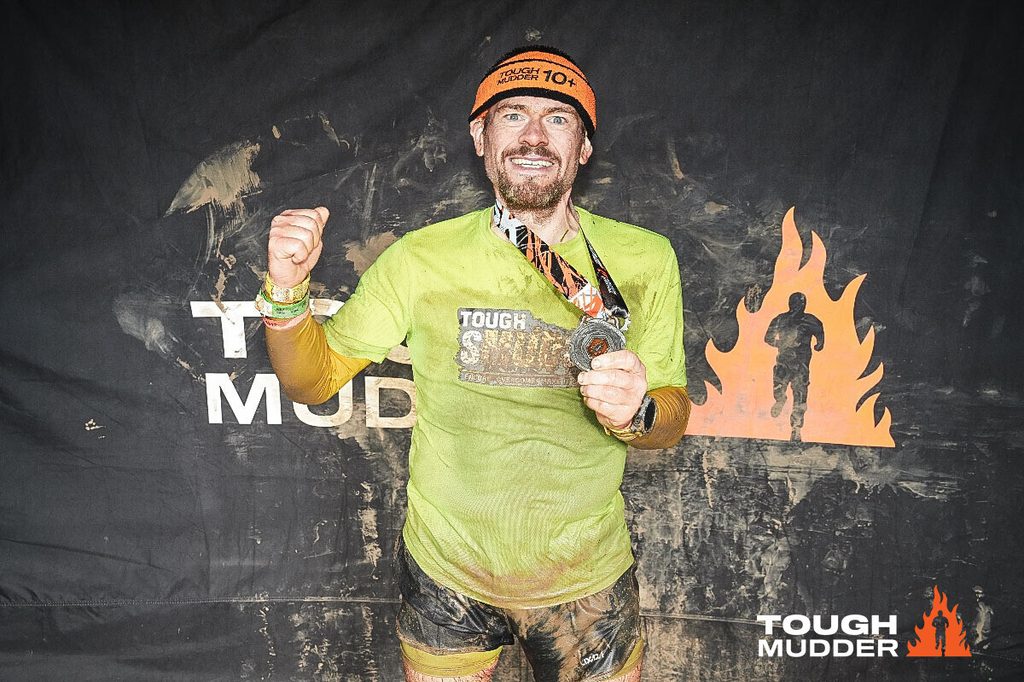
Photo: sportograf.com
The People Behind the Mud
One of the things I’ve enjoyed increasingly throughout this first season is getting to know the people involved in obstacle course racing.
I’ve met ambassadors at several events, spoken to volunteers, chatted with experienced Legionnaires and started recognising people from one weekend to the next.
At Born Survivor, I met Tough Mudder ambassador Wil Chung, who was there (I think) representing the organisation.
At London South, I met more experienced runners and picked up useful advice about tackling obstacles more efficiently.
And at Manchester, those connections began to feel even more meaningful.
I’ve already mentioned Steve, whose World’s Toughest Mudder experience gave me plenty to think about, and Bobbie, whose shout-outs made the final day particularly memorable.
What strikes me is how generous people are with their encouragement and experience.
No matter how many Tough Mudders someone has completed, there’s usually something they’re happy to share.
A technique for getting over a wall.
A suggestion for tackling an obstacle.
An idea for improving efficiency.
Or simply a few words of encouragement when things are getting difficult.
I’m beginning to understand why so many people return to these events year after year.
It’s not just about the medals.
Although, obviously, the medals are very important.
It’s about the community.
One of the things that appeals to me about becoming more involved with Tough Mudder in the future is the opportunity to share that knowledge and encouragement with others.
After all, I was the complete beginner not very long ago.
And I’m still learning something new at every event.
What the Garmin Revealed
Back at home, once the mud had been removed from enough of my equipment to make it usable again, it was time for the Digital Pit Crew to earn its keep.
The Garmin had successfully recorded the GPS tracks, even though my attempts to mark individual obstacles had been rather less successful.
We analysed all six runs, comparing the positions of obstacles, the routes taken and the changes made to the course throughout the weekend.
This was particularly revealing.
The first Saturday 15k followed sections that were missing from the second Saturday run.
Sunday had another change north of Sewer Rat.
And the GPS confirmed my rather creative Saturday 5k navigation.
It also showed that Sunday’s two 5ks followed almost identical routes.
The obstacle-tracking experiment had therefore been only partly successful, but the GPS data itself was excellent.
And it has opened up some interesting possibilities for Tough Smudge.
Rather than simply recording distance and finishing time, I want to build a more complete picture of each run.
- Time spent running.
- Time spent at obstacles.
- Pit stops.
- Pacing.
- Heart rate.
- Elevation.
- And comparisons between repeated laps.
This might all sound rather excessive.
But when you’re preparing for an event lasting 24 hours, small inefficiencies can become important.
And if the Digital Pit Crew can turn all that information into useful lessons, then the statistics have a purpose beyond being shiny.
Although I do quite like shiny statistics.
The Biggest Lessons Weren’t About Distance
The weekend has left me with plenty to think about.
And surprisingly, the fact that I could complete six runs isn’t necessarily the most important discovery.
1. The Cold Is a Serious Problem
Saturday demonstrated that I need to take cold-weather preparation far more seriously.
The Raynaud’s affected my fingers badly enough to make gripping obstacles and operating my watch extremely difficult.
That’s not something I can simply overcome by being determined.
I need to investigate better gloves, suitable base layers and strategies for keeping warm between runs.
And I need to be sensible about recognising when the conditions are affecting my ability to tackle an obstacle safely.
World’s Toughest Mudder will involve many hours on course, including overnight.
If I struggle with my hands during a cold October morning in Manchester, I need a proper plan before Belvoir Castle.
2. I Need to Get Nutrition and Hydration Right
I’d planned my nutrition and hydration before Manchester.
I had energy gels and electrolyte drinks ready.
But looking back, I don’t think I used enough of them.
I’m also fairly certain I didn’t drink enough.
I got through the weekend, but that’s not the same thing as fuelling it properly.
This needs more attention.
Particularly because I’ve started looking at my heart-rate data.
As the weekend progressed, my pace generally reduced while my heart rate seemed to rise.
That could reflect a combination of fatigue, hydration, conditions and the accumulated effort of repeated runs. Some of the Garmin readings may also be inaccurate, particularly given the mud and the difficulties with the watch on my wrist.
But it’s something worth investigating.
Could I actually perform better over a long event by starting more slowly?
Rather than running the early kilometres at a pace I know I can maintain for a normal 15k, should I deliberately conserve energy?
World’s Toughest Mudder isn’t a 5k race.
It’s an endurance challenge.
I don’t need to be the fastest person on the first lap.
I need to be capable of starting another lap many hours later.
That is a very different approach.
3. I Still Have a Lot of Strength Work to Do
There are obstacles I genuinely want to improve at.
My grip strength remains a particular weakness, although Saturday’s problems went well beyond strength alone.
Upper-body strength is another area requiring work.
And then there’s Everest.
My nemesis.
I’ve had several experiences with Everest that have left me worried about injuring myself, and that has affected my confidence.
At Yorkshire, before my injury, I came closer than ever to completing it on my own.
So I know improvement is possible.
But Everest requires more than simply being able to run quickly.
It needs technique, confidence, explosive power and the ability to commit to the approach.
I need to work on jumping, acceleration and strength, alongside improving my overall aerobic fitness.
Then there are Hero Walls and Mudderhorn.
I want to develop the ability to tackle these independently, rather than always needing assistance.
That means improving my ability to jump upwards, pull myself up and control my body weight.
And, of course, there are the numerous hanging obstacles and monkey bars.
They demand grip strength, upper-body strength and technique.
I’m seriously considering joining a gym over the winter.
Indoor climbing is another possibility, particularly for developing grip, pulling strength, body positioning and confidence.
I’ve spent a great deal of time building endurance.
Now I want to start addressing the other areas that could make me a better obstacle course runner.
4. Pacing Is About More Than Running Speed
Manchester has also made me reconsider what constitutes a successful run.
There were occasions when walking was the sensible decision.
The old 4×4 course was one example.
Trying to run across slippery rocks in deeply rutted mud just to maintain an average pace would have been ridiculous.
Likewise, there were moments when I stopped to chat with other runners.
That’s part of the experience.
And for an event like Infinity, time in the event village is going to be every bit as important as time on the course.
How quickly I can refuel, collect equipment and get going again could make a considerable difference.
Steve’s seven-minute maximum pit stop has certainly given me something to think about!
But I also need to remember to enjoy myself.
There’s no point becoming so obsessed with finishing times and accumulating medals that I forget why I started doing this in the first place.
And here’s something I’m almost reluctant to admit.
Perhaps, just occasionally, I need to slow down and smell the roses.
There.
I’ve said it.
Please don’t tell Smudge.
He’ll think I’ve gone completely mad.
But the more I think about it, the more I realise that enjoying the experience is just as important as collecting the results.
I suspect there’s a balance somewhere between relentless endurance athlete and happy muddy hedgehog.
I just haven’t quite found it yet.
The Aftermath: Manchester Has Followed Me Home
I knew there would be some cleaning required after Manchester.
I hadn’t quite appreciated how much.
The kit has been washed repeatedly.
Both pairs of trainers have been washed.
They still need more attention.
And somehow, despite all the cleaning, I’m continuing to discover mud in places where mud really shouldn’t be.
I think a significant portion of Cheshire Showground has relocated to Huddersfield.
The legs were particularly stiff afterwards, and I’ve already been for a sports massage.
But considering what I’d put my body through, the recovery has been encouraging.
It doesn’t mean I can take it for granted.
If anything, the weekend has reinforced the importance of proper preparation, sensible recovery and listening to what my body is telling me.
So, Was It Worth It?
Absolutely.
But perhaps not entirely for the reasons I expected.
- I went to Manchester wanting to prove that I could complete a bigger distance.
- I wanted to test the Garmin.
- I wanted to experiment with fuelling and pacing.
- I wanted to see whether my ambitions for Tough Mudder Infinity were realistic.
- And, obviously, I wanted six more shinies.
I achieved the six finishes.
I proved I can keep moving over two demanding days.
But I also discovered weaknesses that I need to address.
My cold-weather preparation wasn’t good enough.
My fuelling and hydration need work.
My obstacle technique and strength still have room for considerable improvement.
And I need to rethink pacing for longer endurance events.
In some ways, those lessons are more valuable than the medals.
Because Manchester wasn’t the final objective.
It was preparation for something much bigger.
And there’s another lesson I hadn’t entirely anticipated.
The difference between completing an event and experiencing it.
I love the challenge. I love seeing what I can achieve. I love pushing myself beyond limits I once believed were fixed.
But I also love the people, the conversations, the encouragement, the absurd moments and the sheer enjoyment of being part of something.
Sometimes those things deserve a little more attention than the next starting wave.
The next medal.
Or the next statistic.
Although, let’s not get carried away.
I’m not giving up the statistics.
The Digital Pit Crew would be devastated.
What Comes Next?
First, there’s Nuclear Fallout in Essex in November.
Twenty-four kilometres.
In the cold.
Given what happened to my hands at Manchester, I have to admit I’m not particularly looking forward to that aspect of it!
Then come the winter training months, more running, more strength work, and the challenge of putting everything I’ve learnt into practice.
And then 2027.
Infinity events.
Trifecta challenges.
More Tough Mudder weekends.
And, in June, World’s Toughest Mudder at Belvoir Castle, where I’ll be attempting the 24-hour event while raising money for Prostate Cancer UK.
It’s going to be an extraordinary challenge.
But I don’t want to arrive there merely hoping I can keep going.
I want to arrive knowing that I’ve prepared as thoroughly as possible, tested my equipment, practised my nutrition, learnt from my mistakes and developed the strength and endurance required.
Manchester was another important step towards that.
It hasn’t proved that I can complete World’s Toughest Mudder.
But it has helped me understand what I need to do to give myself the best possible chance.
And that, perhaps, is the greatest achievement of the weekend.
Fourteen Tough Mudder finishes in my first season.
Six of them in one weekend.
A collection of lessons, a mountain of muddy washing, and some very shiny new additions to the collection.
Would I do it again?
Well…
Manchester 2027 has moved to early September.
And I’ve already been looking at the calendar.
Apparently, Smudge hasn’t learnt quite as much as he thinks.
Endure. Overcome. Make It Count. 🦔💛